
AI collections software for utilities helps teams connect account servicing, customer conversations, payment arrangements, and arrears follow-up. The operating goal is to resolve the reason a bill remains unpaid and record the outcome correctly.
A customer calls about a water bill that seems unusually high. The collections process sees an overdue balance. The servicing team sees an open billing inquiry. If those records do not connect, another reminder may arrive before anyone explains the bill.
That is a revenue operations problem: billing, support, collections, and cash application all influence when an account is resolved.
Why Are Arrears a Shared Operational Problem?
Collections cannot independently resolve every cause of an unpaid utility bill. A meter inquiry may need investigation. A returned payment needs a transaction check. An assistance request needs the relevant review process.
When departments work from different records, customers repeat themselves and staff spend time locating context. A message can be delivered successfully while the underlying issue stays open.
Revenue operations brings those dependencies into one operating view. Each account needs a clear next action, an owner for exceptions, and a record of whether the issue was resolved.
Which Utility Workflows Need Different Treatment?
| Account condition | Useful next step | Outcome to verify |
|---|---|---|
| Customer questions usage or charges | Route the billing inquiry with account context | Explanation or authorized correction recorded |
| Payment appears to have failed | Check transaction status | Confirmed result and correct account update |
| Customer requests an arrangement | Present eligible options or route for approval | Accepted schedule and installment tracking |
| Customer asks about assistance | Follow the approved referral or review path | Referral or review status recorded |
| Customer has already paid | Check posting and reconciliation | Correct balance and follow-up state |
These are workflow examples. Available arrangements, assistance paths, and contact requirements depend on the utility, jurisdiction, and account.
How Does an Agentic Workflow Help?
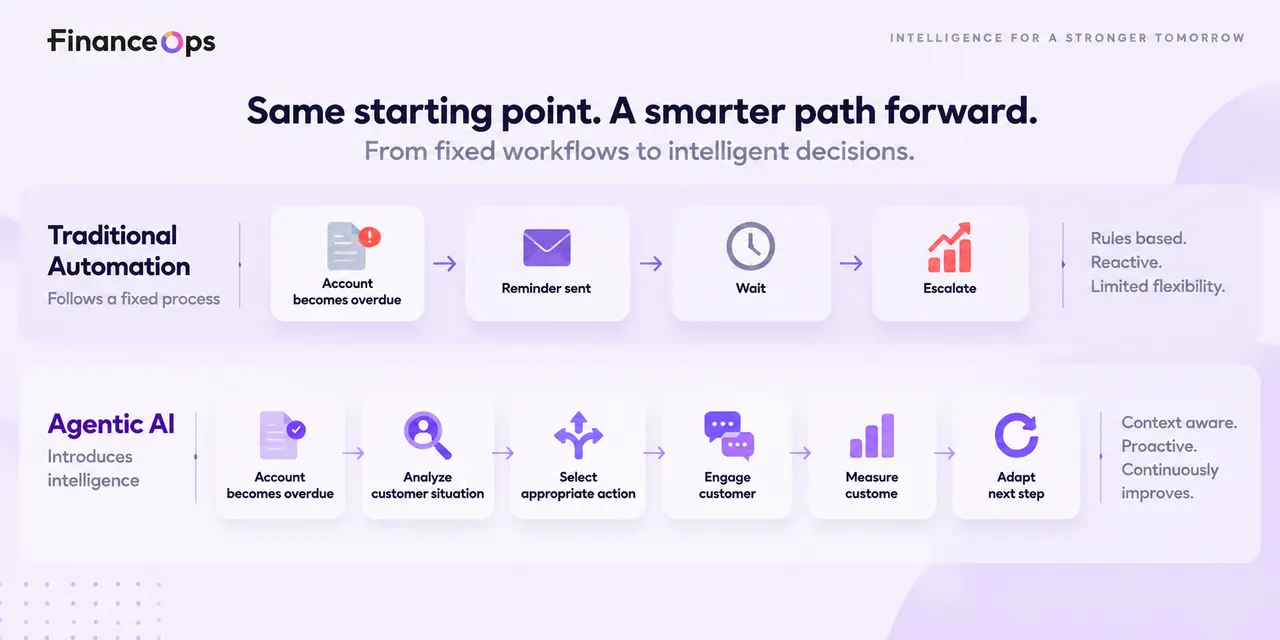
An agentic workflow can interpret a reply, request account information, and coordinate authorized actions as the situation changes. NIST describes agentic AI as goal-directed systems that make decisions and adapt to changing conditions.
For utilities, the practical test is whether a customer reply changes what happens next. If a customer reports a billing problem, the account should reach the appropriate review path with its history. If a scheduled installment posts, follow-up should reflect it.
High-volume portfolios of small balances are especially useful to examine. Staff time spent checking records can exceed the effort needed to send the initial reminder.
Adapting the next action to an account update does not necessarily mean retraining the underlying model. Changes to models, prompts, and configured strategies need an agreed review and testing process.
What Should Stay Under Utility Control?
Define the agent's permitted channels, eligible arrangements, approvals, and handoff conditions. Keep specialist billing and assistance decisions with the authorized team.
Service-status actions require their own permissions and review. Treat a request related to disconnection or reconnection as a distinct workflow, with the utility's applicable requirements built into its handling.
A model's response should not be the sole mechanism that authorizes an account change. The executing system needs to check the request and retain the result.
How Does FinanceOps Connect Servicing and Collections?
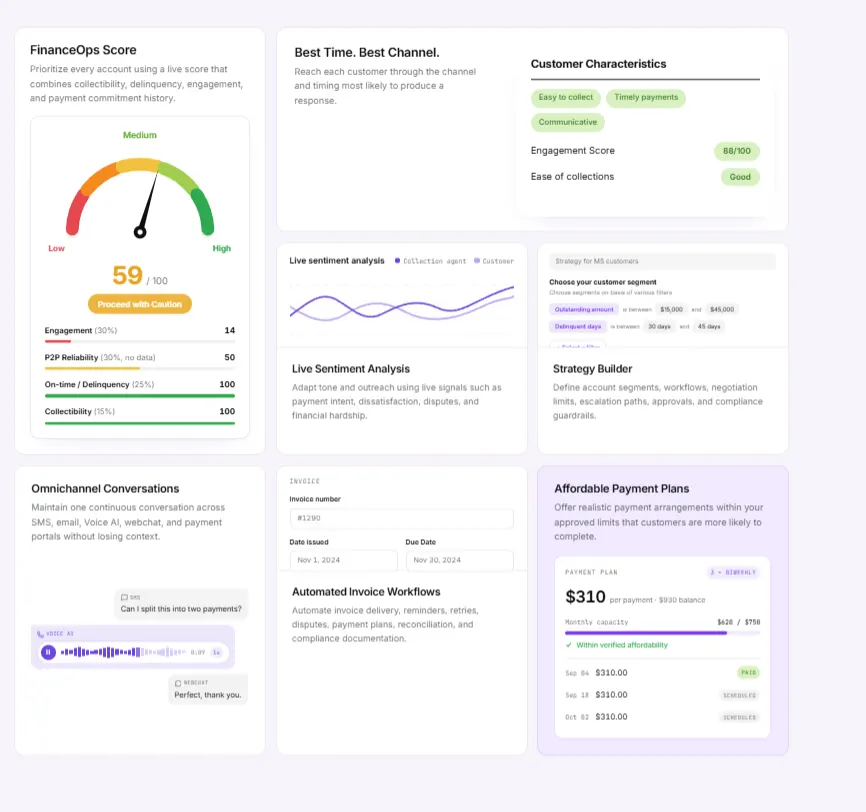
FinanceOps supports utility servicing and collections under the provider's brand. Contact intelligence and FinanceOps Score help prioritize eligible follow-up. Omnichannel conversations connect customer replies across supported channels.
Strategy Builder supports configured treatment paths. Autopilot and Copilot support routine and staff-assisted work. Payment arrangements, invoice workflows, and Agentic Payments connect communication with account outcomes.
Scope the deployment around the utility's billing system, available data, and approved actions. A feature list is useful only when those capabilities address a real operational gap.
What Should Utility Leaders Measure?
Track cash applied to eligible balances, time to resolve billing exceptions, manual touches, kept arrangements, and unresolved handoffs. Keep activity measures, such as messages sent, separate from those outcomes.
A payment that has not reached the correct account should remain visible as a posting exception. A case transferred to another queue should retain an owner and a completion status.
Start with one workflow, such as returned payments or overdue accounts without an open billing inquiry. Test ordinary cases, delayed updates, and requests requiring staff review.
Review FinanceOps pricing against that scope before expanding.