
Intelligent accounts receivable automation helps finance teams coordinate customer follow-up, exception handling, payment updates, and account records. For a CFO planning 2027 investment, the decision starts with portfolio economics and operational capacity.
A team can report more contacts without collecting more cash. It can also recover more while spending enough on manual exceptions to weaken the business case. A useful automation investment makes those relationships visible.
This guide focuses on where to invest and what evidence to require. For the role of timing in recovery economics, read our early-stage collections article.
Where Is the Unserved Portfolio?
Aging balances show what is overdue. They do not show which accounts receive meaningful attention.
Review portfolio coverage by balance size, age, account type, and unresolved issue. Identify where staff effort prevents sustained follow-up. High-volume portfolios of small balances may reveal work that is legitimate to pursue but difficult to serve economically.
Then ask what prevents resolution. Missing documentation, disputed invoices, delayed payment updates, and limited staff capacity require different changes. Automating the same reminder does not solve all four.
What Should the CFO Fund First?
Choose a problem with an observable outcome. Examples include payment updates that trigger unnecessary contact, overdue invoices awaiting documentation, or eligible accounts that receive little follow-up.
The investment brief should state:
- The account population and current process.
- The data and systems required.
- The actions automation may perform.
- The staff owner for exceptions.
- The outcome measures and evaluation period.
- The cost and conditions for expansion.
This makes scope reviewable before procurement begins.
How Should You Judge the Business Case?
Look at cash collected and applied, cost per resolved account, manual touches, and time to resolution. Keep balance reductions from credits or write-offs separate from cash recovery.
Released staff hours can create useful capacity. They become cash savings only when spending falls or a planned expense is avoided. Report both, using the appropriate label.
Check whether the proposed costs include setup, integrations, communication, payment handling, monitoring, and remaining staff work. Compare FinanceOps pricing with the agreed operating scope rather than an isolated headline fee.
Which Records Need to Be Reliable?
Automation depends on knowing what an account currently owes and what happened most recently. Define the authoritative source for invoices, loan obligations, payment status, arrangements, and dispute records.
An LLM can interpret language and propose an action. It should retrieve financial facts from authorized systems. A confident answer is not evidence that a payment posted.
If systems update overnight, agree how the process handles stale or uncertain information. Record source references and timestamps so staff can investigate discrepancies.
What Does Control Mean in Practice?
Give operations an owner for treatment rules and technology an owner for integration reliability. Risk and compliance teams should review the actions within their remit.
Define access permissions, approval limits, stop conditions, and escalation paths. Keep records of tool requests and results. Changes to models, prompts, or workflows should go through an agreed test and release process.
NIST's agent identity and authorization work provides relevant context for managing agent access and actions.
How Does FinanceOps Fit the Investment?
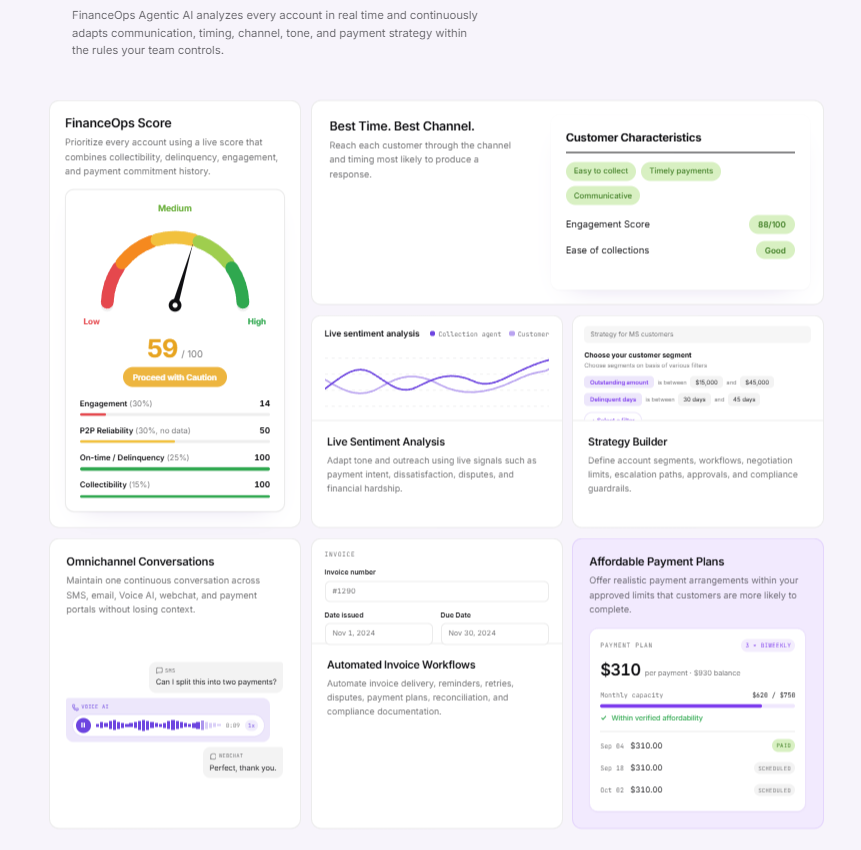
FinanceOps connects account intelligence, customer communication, configured strategies, and payment follow-up. Autopilot supports routine work, while Copilot supports staff-assisted handling.
Strategy Builder gives teams configured treatment paths. Invoice workflows, payment capabilities, and dashboards support the financial outcome and operational review.
For banks, credit unions, fintechs, and utilities, FinanceOps connects servicing and collections under the organization's brand. Choose the modules around the account problems you are funding.
What Can a Customer Result Tell You?
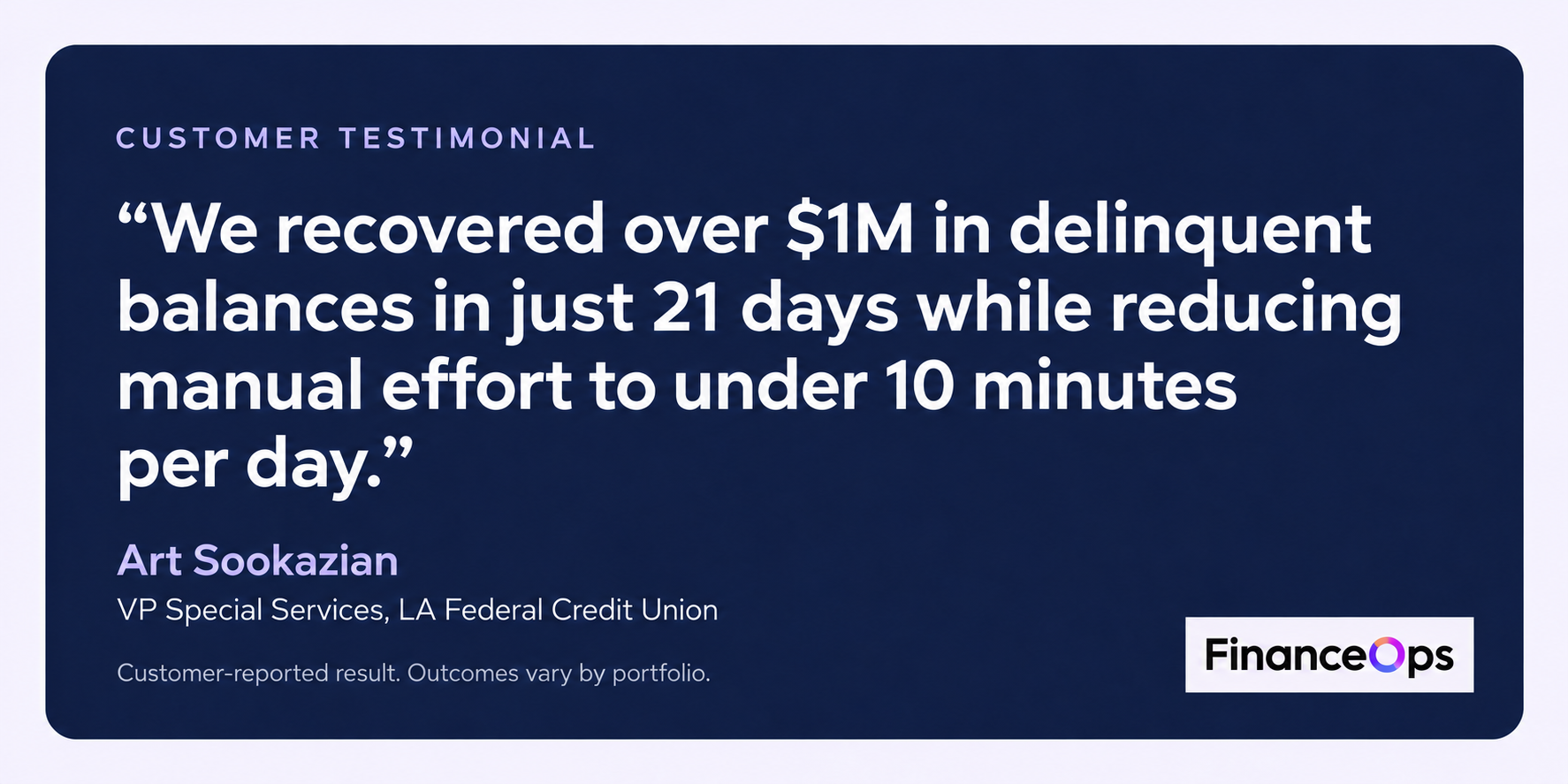
The LA Federal Credit Union case study provides an example of a FinanceOps collections deployment. The testimonial below is published on the FinanceOps homepage.
Use customer evidence to understand the workflow, then compare the portfolio, account age, and measurement period with your own. Your investment decision needs a baseline and costs that reflect your institution.
What Should the Pilot Establish?
Set the baseline before launch. Use comparable account groups or another documented comparison method, and review the measurement period for seasonal or portfolio changes.
Test ordinary accounts, missing records, conflicting payment updates, and cases requiring a person. Review results with the people who will own the process after launch.
Your expansion decision should answer three questions: did the financial outcome improve, did the workload change as expected, and could the team explain what happened?