The hardest part of a Voice AI demonstration is not hearing a natural voice. It is finding out whether the system can handle the next unexpected sentence without losing the account context or taking an unauthorized action.
A member says, “I already paid.” Another asks for Friday. A third disputes the balance. A fourth wants a person. Those replies reveal more than a polished opening script.
This guide compares FinanceOps, AviaryAI, Eltropy, Glia and interface.ai for credit union collections use cases. Some are collection-focused offerings; others are broader financial institution service platforms. One currently invites early access for its collections product. The shortlist makes those distinctions explicit.
Quick answer: Evaluate FinanceOps for recovery conversations connected to approved actions and human review; AviaryAI for outbound credit union collection calls; Eltropy for Voice AI within member communication workflows; Glia for banking Voice AI and outreach connected to service; and interface.ai for banking Voice AI with an early-access collections offering to validate.
FinanceOps publishes this comparison and appears in it. Selection is based on official product information reviewed November 23, 2026. We did not run a controlled voice-quality or recovery-performance benchmark. Numbering does not imply a measured ranking.
What makes Voice AI useful for collections?
Voice AI needs more than speech recognition and an agreeable tone. In a collection workflow, it must have an appropriate basis for contacting the member, complete the required identity steps, use reliable account information, respect approved options and respond correctly when it cannot continue.
The conversation also needs a result that other systems and people can use. A transcript alone may explain what was said while leaving the collection operation unchanged.
A Deloitte banking customer service study published in June 2026 found that 71% of its 100 surveyed US banking customers placed ease of resolution among their top three priorities. It was a small banking sample, not a credit union collections benchmark. Still, it offers a useful evaluation question: how easy is it for a member to reach a real resolution when the conversation gets complicated?
Compare five Voice AI options by the work around the call
| Platform | Reason to evaluate | Availability or scope detail to verify |
|---|---|---|
| FinanceOps | Voice-led recovery linked to account context, approved payments and human review | Enabled voice actions, payment integration and separate usage charges |
| AviaryAI | Outbound collection calls for credit unions | Exact collection stages, core writeback and follow-up channels |
| Eltropy | Voice AI connected to broader member communication and collections | Required products, live transfer and account update behavior |
| Glia | Banking Voice AI, outreach and service continuity | Collections-specific workflow depth in the proposed configuration |
| interface.ai | Banking Voice AI and an emerging collections product | Collections page invites early access and uses beta/alpha labels; confirm release scope |
Do not score a vendor only on whether it says “payments” or “handoff.” Ask what action occurs, what authority permits it, what system confirms it and what the person receives.
The five platforms
1. FinanceOps: Voice AI connected to recovery outcomes
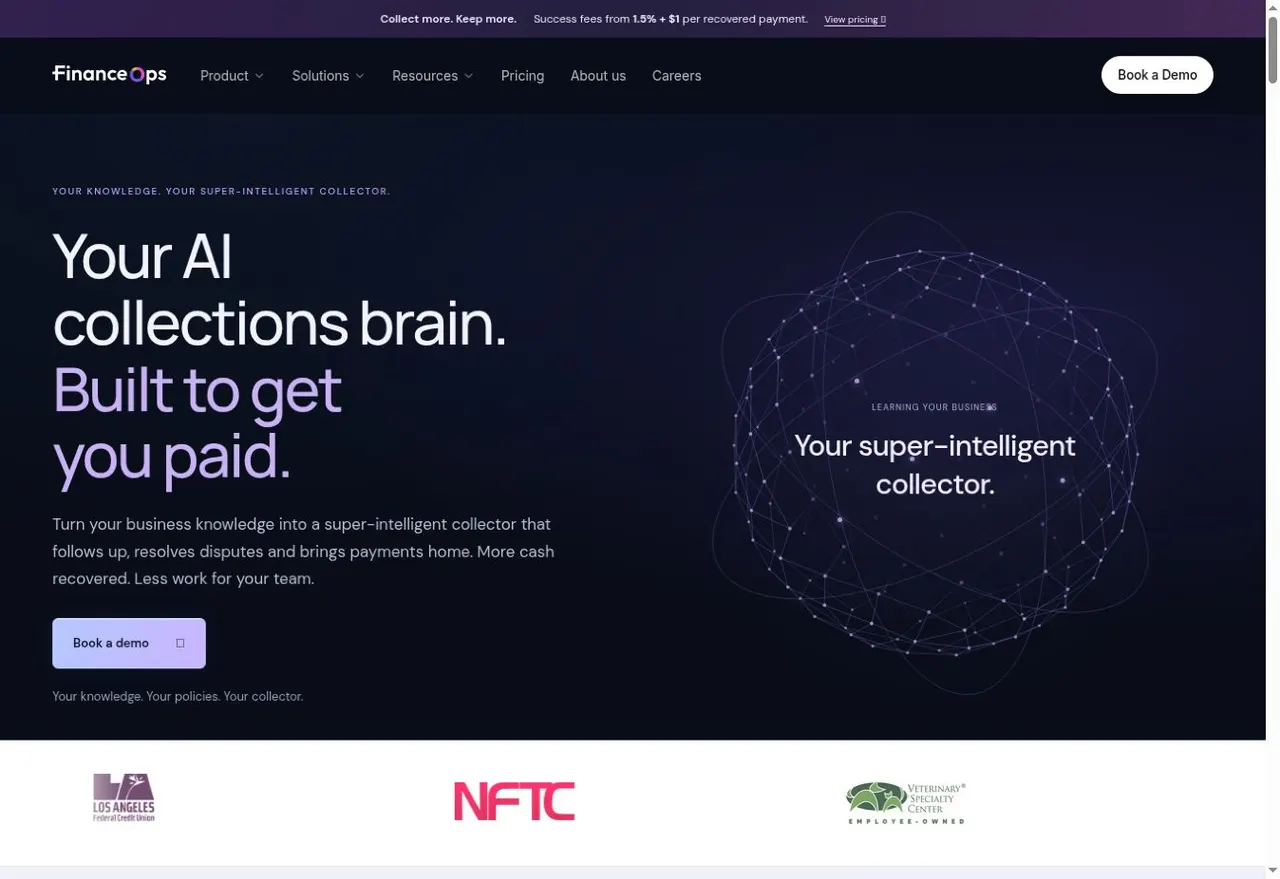
FinanceOps brings Voice AI into a first-party recovery workflow. Alice uses available account context and approved guidance to support conversations, permitted payment steps and review routing. Collectors Brain is the context and action model behind that experience.
Best fit: A credit union that wants routine recovery work to progress while specialist cases reach people with usable context.
Demonstration request: After verification, ask Alice to explain a recorded balance, capture a permitted commitment and respond to a payment-system timeout. Then ask for an option outside the approved limits. Inspect what changed on the account and what reached the Resolution Center.
Change control: Agent Builder supports a plain-language description of a response problem, a proposed prompt edit and before-and-after simulation. Authorized users decide when to release it and can use “Take back” to reverse the change. Confirm the current super-admin access and availability for Voice Follow-Up and Voice Reply.
Commercial point: Autopilot’s base collection price is 1.5% of eligible recovered cash plus $1 per recovered payment. Voice AI and other applicable charges need to be included in the agreement and cost model. Read the Voice AI workflow guide and pricing.
2. AviaryAI: outbound collections calls for credit unions
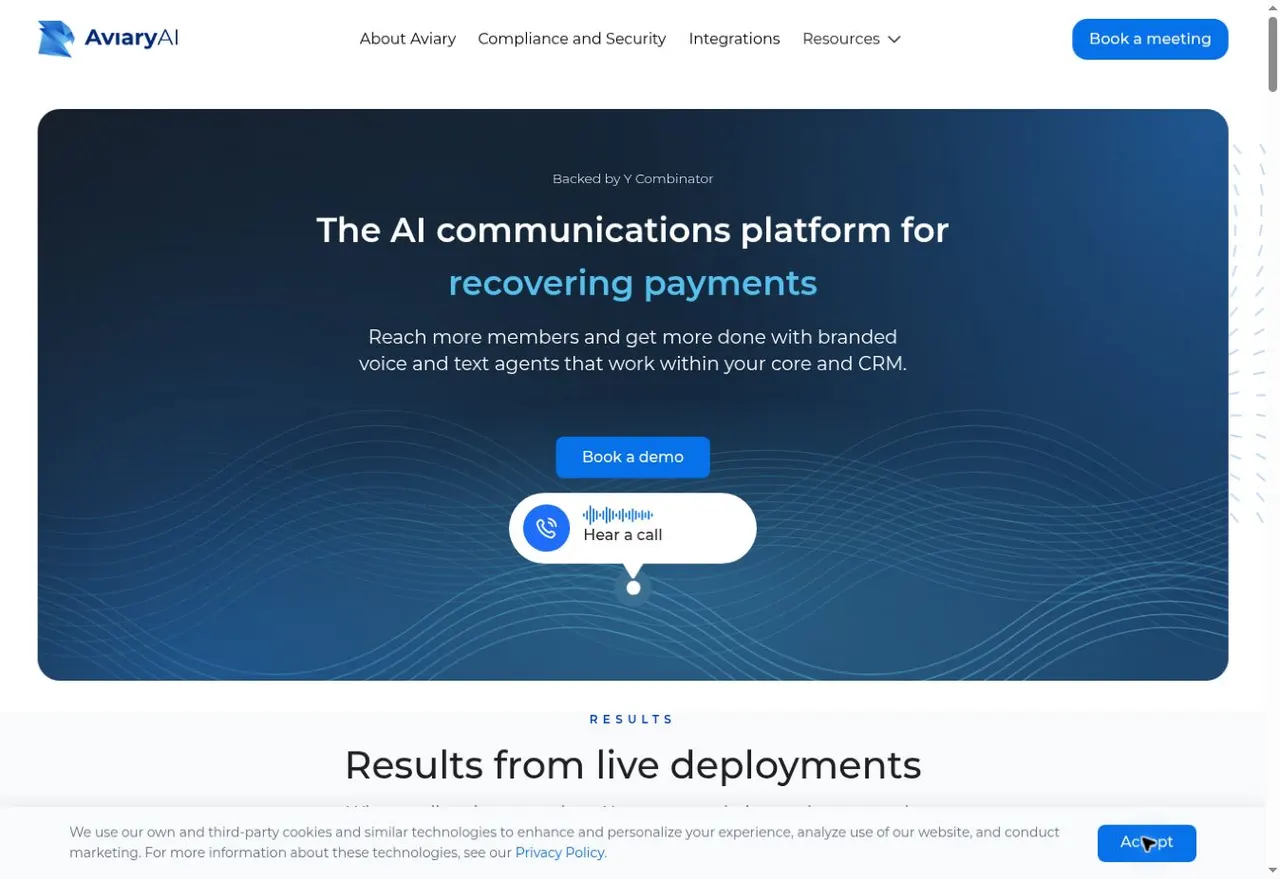
AviaryAI publishes a credit union collections use case describing outbound calls, identity verification, promise-to-pay capture, follow-up and routing to people when needed.
Best fit: Credit unions looking closely at the capacity and consistency of early-stage outbound collection calls.
Demonstration request: Ask the agent to record a commitment, then show the corresponding core or collection-system update and the next scheduled contact. Verify which follow-up channels are enabled in the proposed deployment and how an unresolved call reaches a collector.
Commercial point: Request a quote for the actual calling volume, integrations and support scope. Treat AviaryAI’s published deployment results as vendor-reported evidence, with their own definitions and cohorts. Do not compare its contact or commitment figures directly with another vendor’s recovered-cash metric.
3. Eltropy: Voice AI within member communication workflows
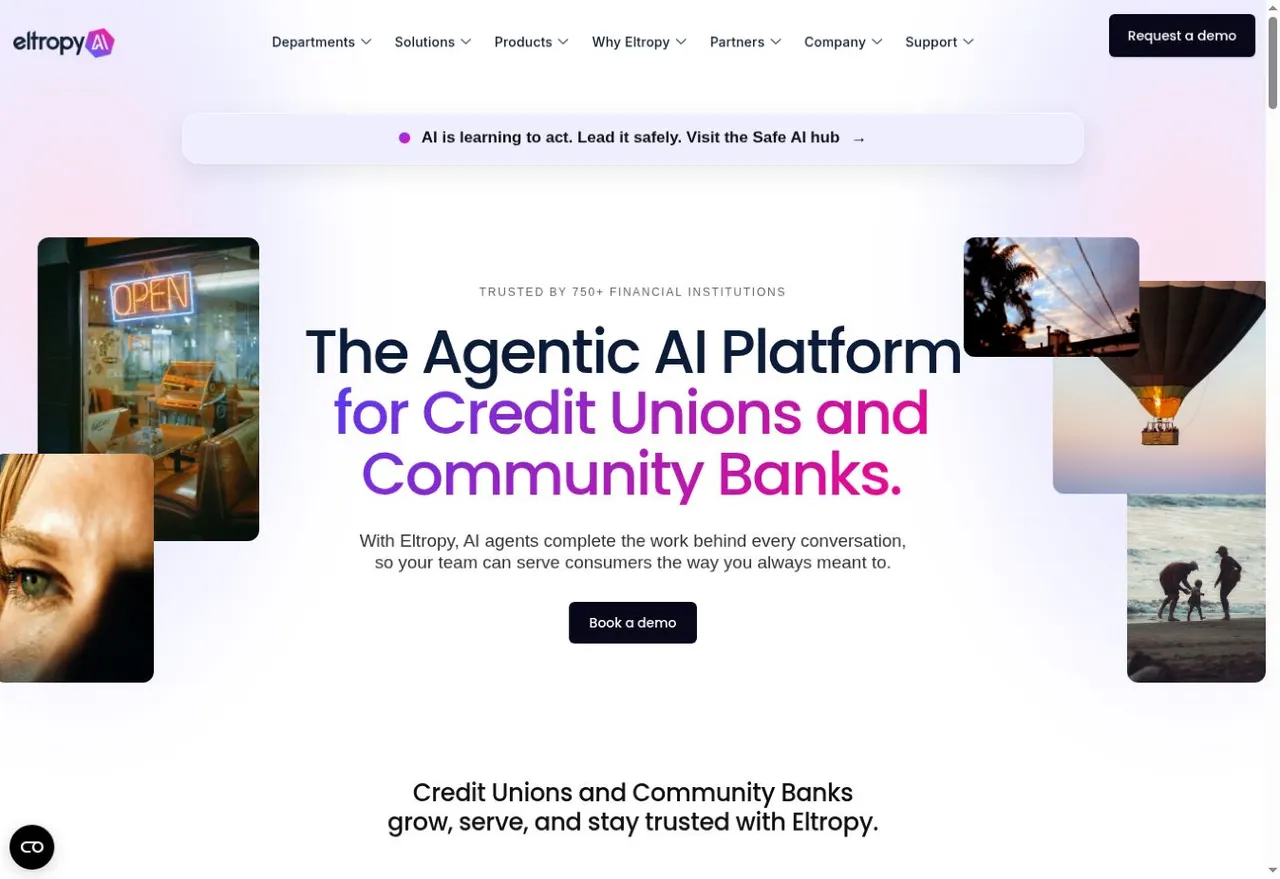
Eltropy offers AI Voice Agents and an AI collections offering for financial institutions. That makes it relevant when a credit union wants phone interactions connected to its wider member communication environment.
Best fit: Institutions evaluating Voice AI alongside text, service and collection workflows.
Demonstration request: Move a member from an earlier message into a phone interaction and then into a specialist conversation. Ask the specialist to show the facts received without reopening multiple systems. Separately test an approved payment and the update to the authoritative record.
Commercial point: Identify the products required to reproduce the demo. Obtain an itemized scope for voice, AI, collections, integration and support. A platform-wide capability should not be assumed to be included in every package.
4. Glia: banking Voice AI and service continuity
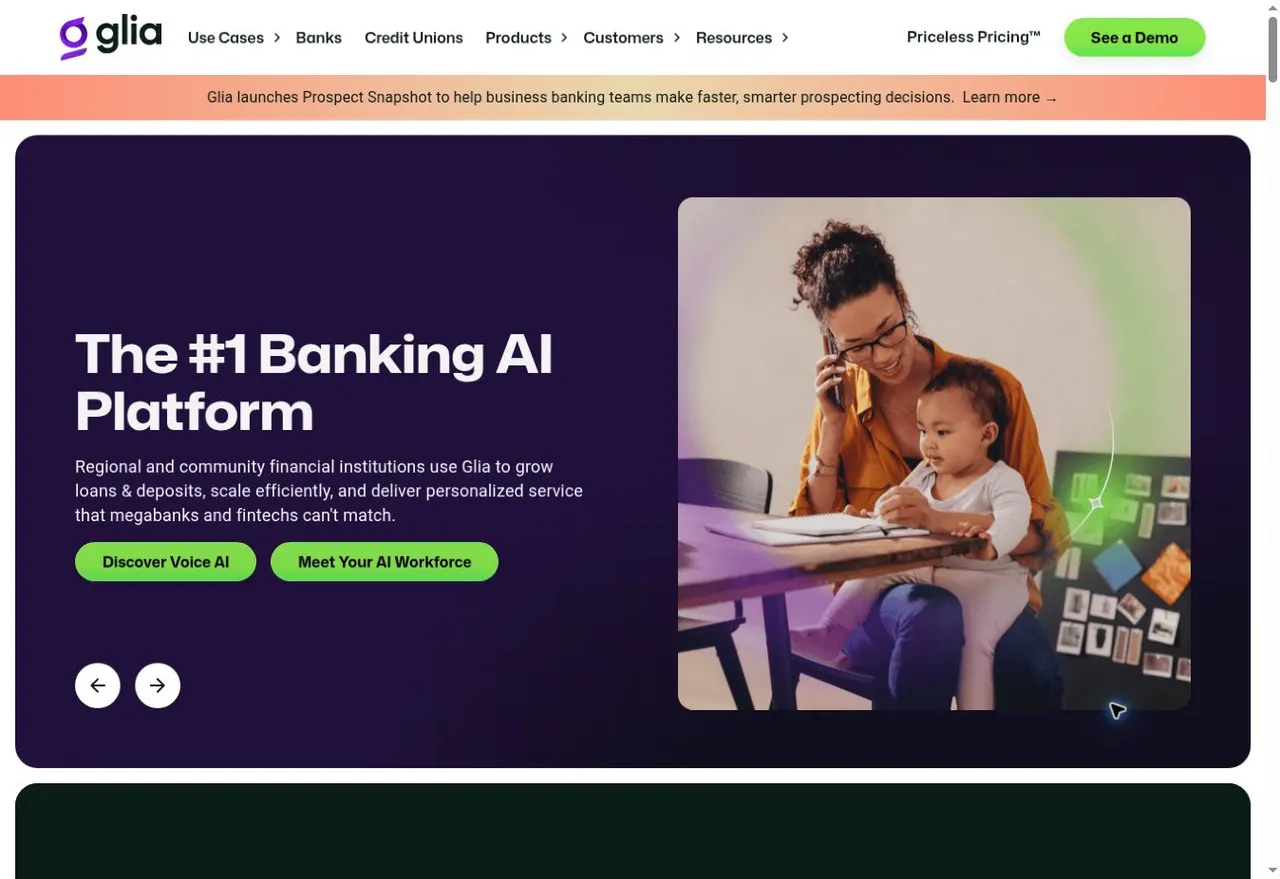
Glia offers Voice AI, outreach and payments and collections use cases within its banking platform.
Best fit: Credit unions assessing collections as part of a broader service and contact-center experience.
Demonstration request: Use a collection-specific scenario rather than a general balance inquiry. Ask the system to handle an existing commitment, an unavailable payment system and a request for a person. Establish which functions are available in the proposed deployment and which depend on additional integration or services.
Commercial point: Review Glia’s pricing approach and obtain a proposal matched to the required scope. Compare the total operating cost with the same collection workload, not a different contact-center use case.
5. interface.ai: banking Voice AI with collections availability to confirm
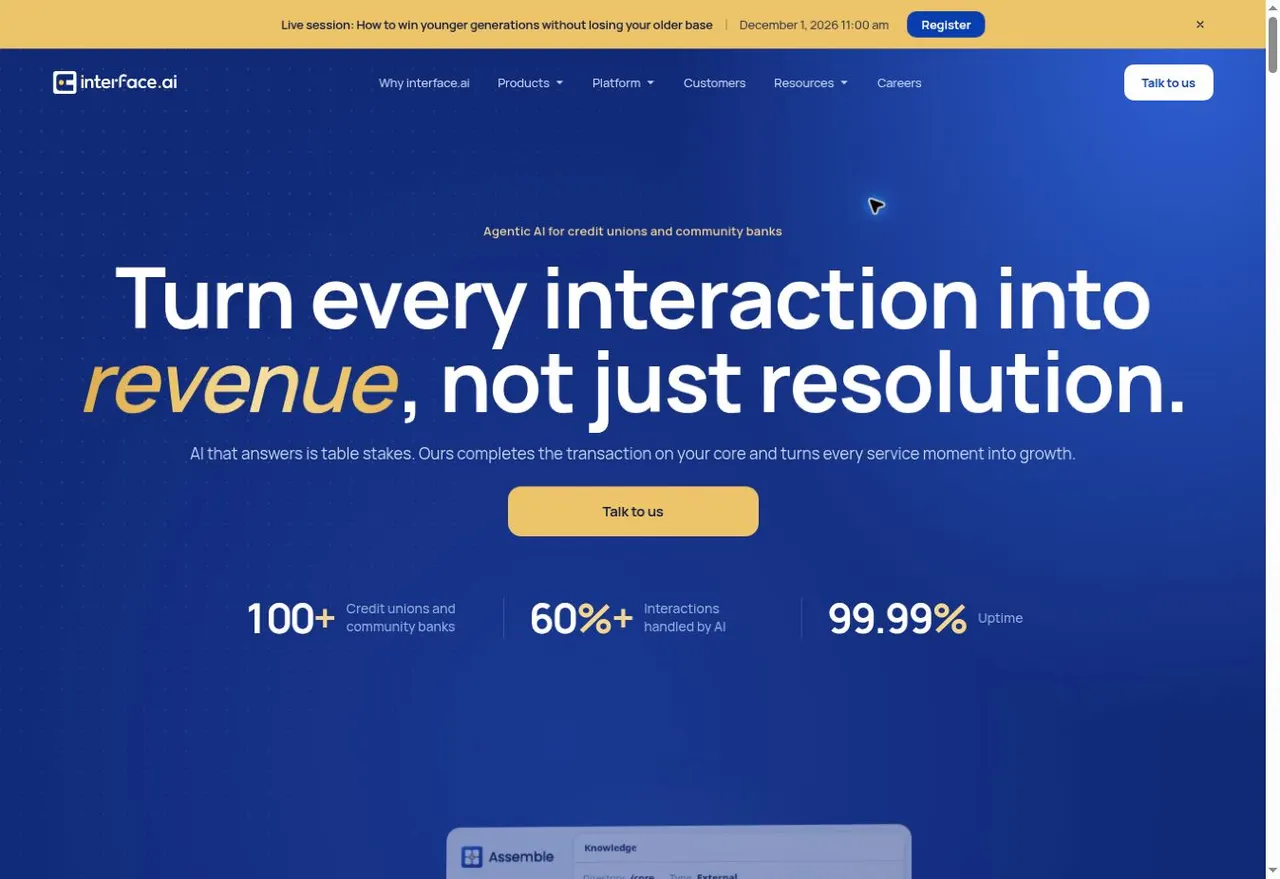
interface.ai offers banking AI products and describes Agentic Collections AI across voice, SMS and email. At review, the collections page invited early access and used beta or alpha labeling in different parts of the site.
Best fit: Institutions considering a broader banking AI platform and willing to verify the maturity and availability of its collections offering.
Demonstration request: Require the vendor to distinguish generally available banking Voice AI from the collections release being proposed. Test identity verification, commitment capture, approved options, writeback and escalation using the offered version.
Commercial point: Confirm early-access terms, support, production eligibility, rollout milestones and the capabilities contractually included. A roadmap or early-access invitation should not be presented internally as an already accepted production implementation.
Four conversations that reveal the real capability
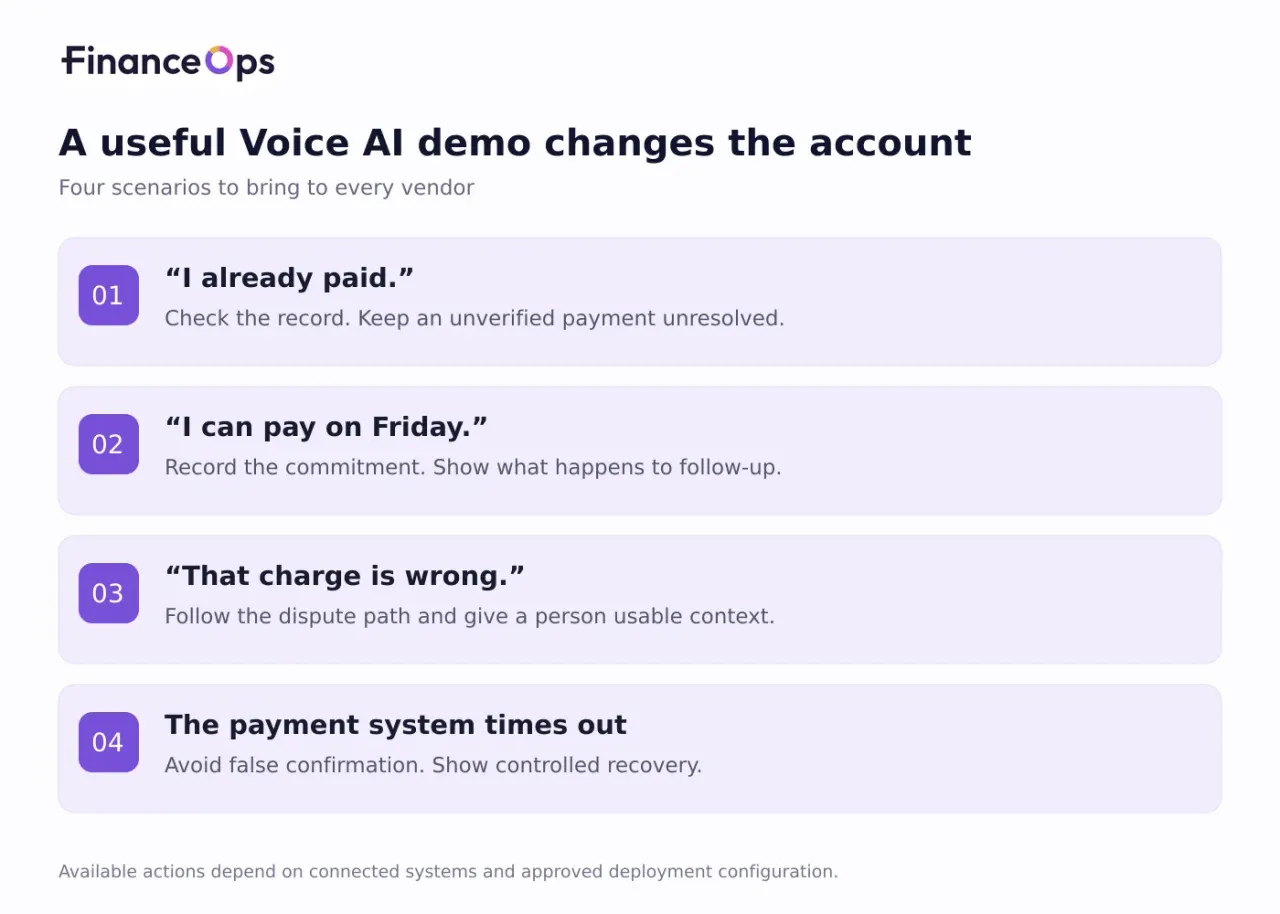
“I already paid.”
Provide a stale record that does not yet confirm the reported payment. The agent should distinguish the member’s statement from a verified transaction and follow the approved handling path. It should not claim to see money that is absent from the source system.
“I can pay on Friday.”
The test is not complete when the agent says “thank you.” Inspect the amount, date, account update and effect on subsequent contacts. If Friday passes without confirmation, show how the workflow identifies the unresolved commitment.
“That charge is wrong.”
The agent should recognize that the member is disputing the account and follow the configured review process. Inspect the pause or routing behavior and what the employee receives. A handoff without the disputed item and relevant context creates avoidable repeat work.
“Can I speak with someone?”
Test the normal route and the unavailable-specialist route. A successful transfer should preserve context. An unavailable employee should not leave the member with a false promise that someone has joined. Define the approved next step and expected follow-up.
Use the collections Voice AI pilot checklist for the full scenario set, including interruptions, ambiguous answers and system failures.
What should a human receive after the call?
The Resolution Center should be evaluated as part of the conversation, not as an unrelated dashboard. The employee needs the account and interaction, the member’s request, verified facts, attempted actions, reason for stopping and unresolved decision.
In FinanceOps, the desired operating pattern is for Alice to handle defined routine work and bring in the team when evidence or authority is insufficient. Reviewed cases can reveal where approved knowledge or instructions need improvement. They do not automatically authorize new permissions or unreviewed production changes.
Read where human review fits and who sets the negotiation rules before finalizing the demonstration script.
Hear the voice. Understand the next step. Explore how Collectors Brain connects a member’s conversation to account context, permitted actions and human review.
How to measure Voice AI economics
Separate the conversation funnel from the payment outcome. Measure eligible accounts, attempted contacts, right-party conversations, commitments, confirmed payments, unresolved exceptions and complaints. Define each denominator.
A promise-to-pay conversion rate based on connected calls will look different from a payment rate based on all assigned accounts. Neither metric should be relabeled as the other. Add staff review time and the cost of incomplete or incorrect handoffs.
For FinanceOps, model the base collection fee alongside Voice AI, processing and other applicable charges. If $100,000 is recovered across 500 successful payments, the base collection fee is $2,000. The value of voice should be assessed against a comparable cohort and the total cost of achieving the result.
The published SkyOne case study reports eight times more payments processed and 90% lower operating costs in its stated comparison. Those figures should not be attributed to Voice AI alone without supporting evidence.
Choose the voice workflow, then choose the voice
Natural speech matters because members need to understand and respond comfortably. But account accuracy, approved actions and usable handoffs determine whether the call helps the operation.
Start with a small set of required scenarios and ask each vendor to demonstrate the resulting records. Use our AI collections evaluation guide to score the evidence. If you also need to replace the collector workbench, read the credit union software shortlist. For broader categories, see the ten-platform guide.
Sources and review notes
Sources include official product pages linked in each profile, the Deloitte banking service study, FinanceOps pricing and the published SkyOne case study. Availability was reviewed November 23, 2026.